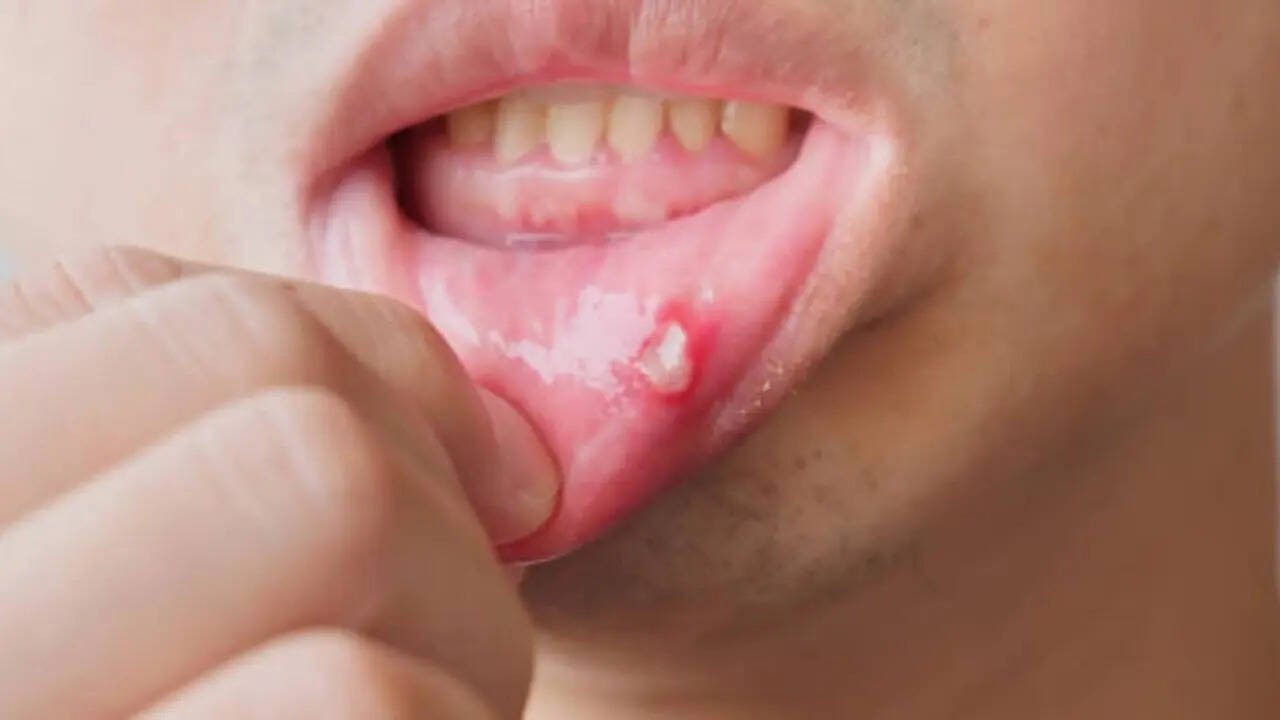
When a Mouth Ulcer Doesn't Heal: Early Warning Sign of Mouth and Throat Cancer
A mouth ulcer that does not heal within two weeks should not be ignored, as it can be an early warning sign of mouth or throat cancer. Experts warn that persistent sores, red or white patches, bleeding, pain, or swallowing difficulty may signal oral cancer, especially among tobacco and alcohol users.
Spotted an ulcer in your mouth? Well, it should heal on its own within a week or two, and when it doesn't, it should worry you. According to experts, a recurring canker sore can be a very early sign of mouth and throat cancer, which, if diagnosed early, can be treated well in time.
"Unfortunately, a lot of people ignore this symptom as a minor infection or irritation, leading to delayed medical attention. In mouth and throat cancers, early changes may appear as a persistent ulcer, white or red patches, thickened areas, or unexplained bleeding inside the mouth," Dr Kundan, consultant - surgical Oncology, Manipal Hospital, told Times Now.
Appearance and Characteristics of Mouth Ulcers
The tiny bumps inside your mouth, cheeks, lips, tongue, or base of gums are open and take a round shape, but can also be oval sometimes, with white, yellow, or red edges around them.
However, eating must be done cautiously because these lesions can be extremely painful, especially when you drink fluids or brush your teeth with toothpaste. They spontaneously heal within two weeks, but can cause problems while taking food or water. Accidentally biting yourself while eating, stress, or depression can result in ulceration as well as alterations in body chemistry, such as a lack of some vitamins, like vitamin C.
Cancer-Related Ulcers vs. Normal Ulcers
If these ulcers are due to cancer, they do not go away over time. Doctors say you would experience pain that increases gradually with progression. Oral cancers also often have irregular edges and vary in colour from red, white, or mixed.
"What makes these ulcers particularly concerning is that they are often painless in the early stages, leading people to delay medical attention. Tobacco use, excessive alcohol consumption, poor oral hygiene, and repeated irritation from sharp teeth or ill-fitting dental appliances can further increase the risk," said Dr Abhijeet Singh, senior consultant - Respiratory Medicine, ShardaCare Healthcity.
Other Symptoms Associated with Mouth Cancer
Apart from ulcers and painful sores, there may be localizing symptoms like:
- Bleeding for no reason
- Numbness in your lips and mouth
- Discomfort within the throat
- Swallowing problems
- Significant weight loss
- Earache
- Chronic bad breath
Risk Factors for Mouth and Throat Cancer
Mouth and throat cancer, also known as oral cancer, starts in the squamous cells in your oral cavity. Squamous cells are flat and, when viewed under a microscope, look like a fish scale. Normal squamous cells become cancerous when there are changes in their DNA, and cells begin growing and multiplying. Over time, these cancerous cells spread to other areas inside of your mouth and then to other areas of your head and neck or other areas of your body.
According to experts, around 75 per cent of those who develop oral cancer have the following habits:
- Smoking cigarettes, cigars, or pipes
- Use smokeless tobacco products such as chewing tobacco, dip, snuff, or water pipes
- Regularly drink excessive amounts of alcohol
- Spend a lot of time in the sun without protecting their lips with sunblock
- Have human papillomavirus or HPV
- Have a family history of oral cancer
Conclusion
If you notice a mouth ulcer that doesn't heal within two weeks, consult a healthcare professional immediately for proper diagnosis and treatment.
Our Specialist

Dr. Abhijeet Singh
MBBS, DNB, MD (Tuberculosis & Respiratory Disease), DM (Pulmonary & Critical Medicine)